
Hospice and palliative care providers aim to promote comfort, dignity, and quality of life for their patients with advanced or life-limiting illnesses. Keeping the patient in a home or home-like environment without undue disruption or undue stress is part of this care.
Transporting palliative or hospice patients to a hospital or imaging center is time-consuming, physically and emotionally taxing, and usually inconsistent with the dignity and care of the hospice program. Leaving the home environment- even for necessary diagnostic imaging-is often more undesirable than the procedure.
Mobile Images offers mobile ultrasounds and X-rays for hospice and palliative care services. Services can be provided either in a patient‘s home, in assisted living settings, or in hospice facilities.
By bringing imaging services directly to the patient, providers can obtain the necessary clinical information without the need for uncomfortable, unfamiliar, or stressful changes to routine or environment.
Hospice and palliative care team members are concerned not only with clinical needs but also with the comfort and dignity of each patient.
Issues that commonly arise are:
All of these issues can lead to conventional imaging being impractical or inconsistent with home care goals. Mobile imaging allows providers access to essential diagnostics without threatening the patient experience.
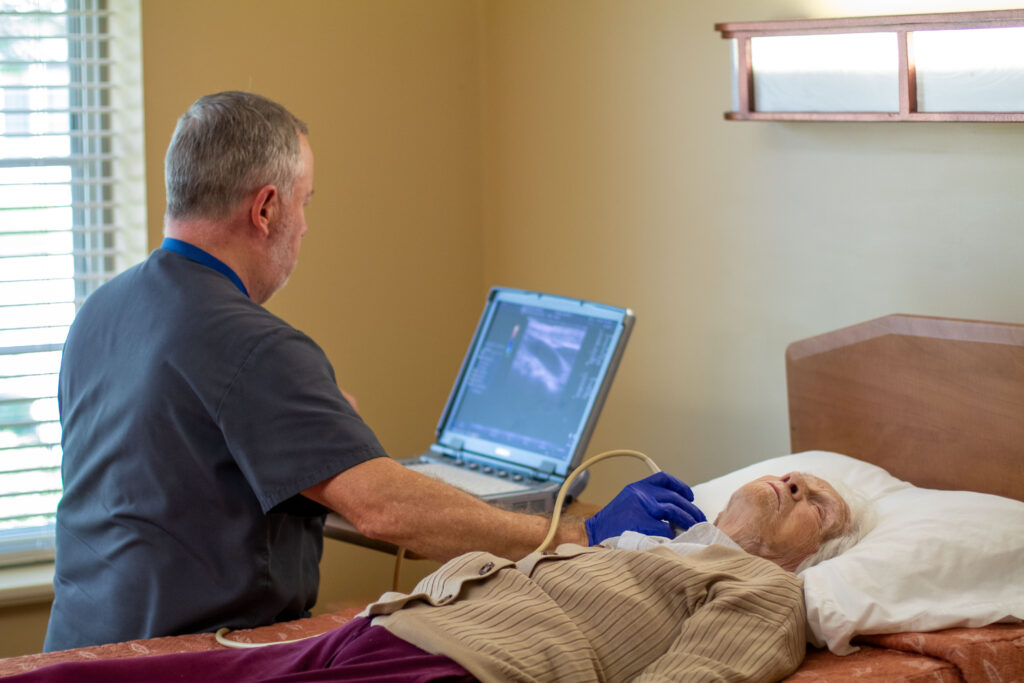
Mobile Images provides mobile diagnostic imaging that complements the provided services of hospice and palliative care.
Our services include:

Mobile digital X-ray units make it possible to take images in a location that is convenient for the patient.

Ultrasound imaging can be performed locally in order to aid clinical decisions.
Exams are often done in the patient's bed or chair in order to avoid excessive movement.

Imaging is readily available to meet changing needs of care.

Images are examined by radiologists, with reports provided back to the ordering provider in a timely fashion.
Our approach prioritizes both clinical accuracy and patient-centered care.

A physician, or authorized provider, administers the order for an imaging exam.

A licensed technologist can provide portable imaging equipment on-site.

The imaging exam is completed on site, frequently in the patient's room.

Images are encrypted and securely sent to a radiologist to interpret.

The diagnostic report is sent to the provider for treatment planning.
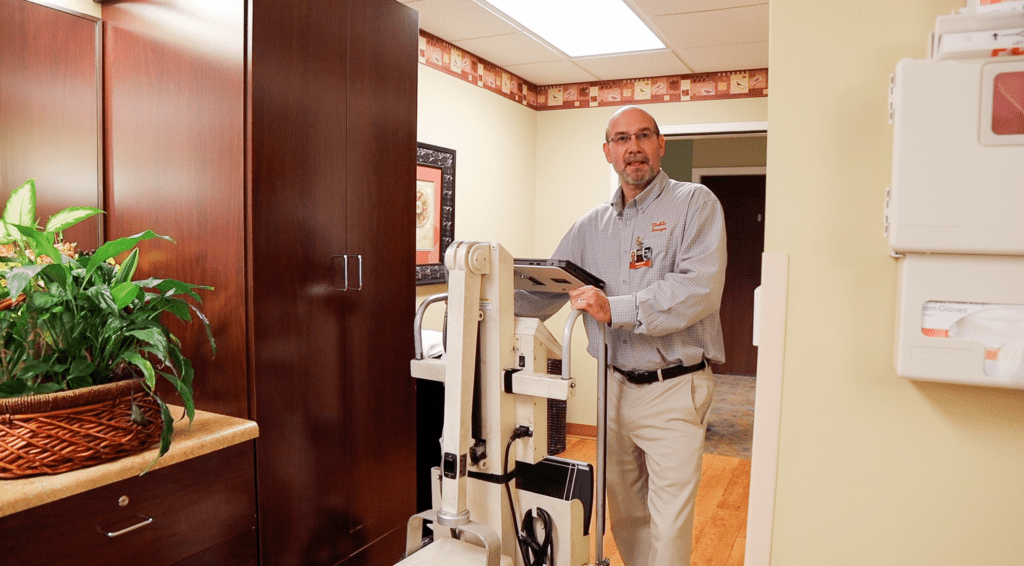
Mobile imaging supports both clinical and emotional care goals.
Benefits include:
For hospice providers, mobile imaging helps ensure that diagnostics do not interfere with the patient’s quality of life.
Mobile Images has been providing diagnostic imaging services to sensitive care sites and settings for over 20 years.
Hospice and palliative care specialists turn to Mobile Images for:
We have learned that compassion, communication, and respect are critical in any situation.

Mobile imaging lets the patient have access to diagnostic tests without being moved out of the environment that they feel comfortable in.
Yes. Services from Mobile Images are regularly conducted at home, nursing facilities, assisted living, and hospices.
Yes. Avoiding transport reduces physical discomfort and lessens emotional stress.
Usually, yes.
Coverage will depend upon the patient’s diagnosis and the reason for the imaging.
There might be certain instances where the patient’s insurance gets billed for services that are not related to the hospice diagnosis.
Most of the hospices have agreements to facilitate the process.
Generally, a physician order and patient documentation would be needed.
Yes. Information obtained through diagnosis will aid health practitioners in making decisions regarding patient care.
Mobile X-Rays are some of the services most often ordered, although other services are available.
Services can be scheduled almost immediately.
Yes.
Mobile Images works directly with doctors, hospices, caregivers, and family members for scheduling purposes.
Yes.
Yes.
Mobile Images operates throughout most of the Southeastern United States.
Yes. Mobile Images provides you with services where you can get the necessary imaging in your own home.
The patients who are bedridden, the ones with some physical difficulties traveling, the discharged from the hospital, and patients with some chronic disease could use such imaging services.
It depends on the needs of the patient and their place of residence. It may involve X-ray, ultrasound, EKG, echocardiography, etc.
Yes. Mobile Images offers services to the patients in all of the above-listed facilities.
A physician’s order is mandatory. Upon receiving an order, Mobile Images will communicate with the patient, caregiver, or home health agency.
Yes, the nurses do help to schedule these imaging appointments.
The order from a physician, patient information, insurance details, and contact details are needed.
It is possible in most cases. It depends on the location and availability of service.
Patients are more apt to undergo suggested diagnostic procedures when there are no transportation barriers in place.
Diagnostic results in a timely manner can assist in identifying problems and making sound decisions on the treatment plan.
Patients are generally happy about being able to be treated in their comfort zone without having to make extra trips for an appointment.
Yes. Family members can be present at the time of the examination.
Reports will be provided promptly after they have been interpreted by the radiologists.
Results will be sent to the ordering practitioner directly and will be available to the patients’ clinical team, as appropriate.
Yes. Mobile Images provides HIPAA-compliant report transmission.
Yes. Results may be imported into the care documentation system.
If accurate, on-call imaging is essential to your hospice or palliative care providers, Mobile Images can enhance your care team.
Ask for mobile imaging to be brought to patients in a familiar setting, when they need it most.

We use cookies to improve your experience on our site. By using our site, you consent to cookies.
Manage your cookie preferences below:
Essential cookies enable basic functions and are necessary for the proper function of the website.
Statistics cookies collect information anonymously. This information helps us understand how visitors use our website.
Google Analytics is a powerful tool that tracks and analyzes website traffic for informed marketing decisions.
Service URL: policies.google.com (opens in a new window)